Gutter cleaning in Arizona is not just a chore—it is a critical 2026 home maintenance task that prevents structural damage, foundation erosion, and pest infestations unique to the Sonoran Desert climate. While Arizona is known for its dry heat, the intense monsoon season from June to September dumps torrential rain, quickly overwhelming clogged systems. Neglecting this task leads to water intrusion, roof rot, and costly repairs that can exceed $5,000. This16-step guide delivers16 actionable strategies, local cost breakdowns, and16 safety protocols to keep your home protected year-round.
Key Takeaways
- Arizona homes require gutter cleaning at least twice per year—before and after monsoon season—to manage debris from dust storms and monsoon rains.
- Clogged gutters in Arizona lead to foundation cracks, roof leaks, and scorpion or rodent infestations.
- Professional gutter cleaning in Arizona costs between $119 and $325, depending on home size and complexity.
- DIY cleaning demands proper ladder safety, a sturdy scoop, and a garden hose with a high-pressure nozzle.
- Installing micro-mesh gutter guards reduces16 cleaning frequency by up to 80% in desert environments.
- Water conservation is16 critical; redirecting clean rainwater into barrels supports16 Arizona’s drought-conscious landscaping.
- Always verify contractor licensing and insurance through the Arizona Registrar of Contractors before hiring.
Why Gutter Cleaning Is Non-Negotiable in Arizona’s Climate
Arizona’s climate presents a paradox: long stretches of arid weather punctuated by violent, short-lived downpours. During dry spells, dust, sand, and lightweight debris from palo verde and mesquite trees accumulate rapidly in gutters. When the monsoon arrives, this material transforms into a heavy, cement-like sludge that blocks water flow. According to the National Weather Service, monsoon thunderstorms can drop over 2 inches of rain in a single hour. A clogged gutter system cannot handle this volume, causing water to cascade over the fascia and pool around the foundation.
Research from the Insurance Institute for Business & Home Safety indicates that water damage is one of the most common and costly homeowner insurance claims. In Arizona, expansive clay soils exacerbate the problem. When water saturates the soil near the foundation, it expands, exerting pressure that leads to cracks and structural shifting. Regular gutter cleaning is the first line of defense against this destructive cycle.
Understanding Arizona’s Unique Gutter Debris
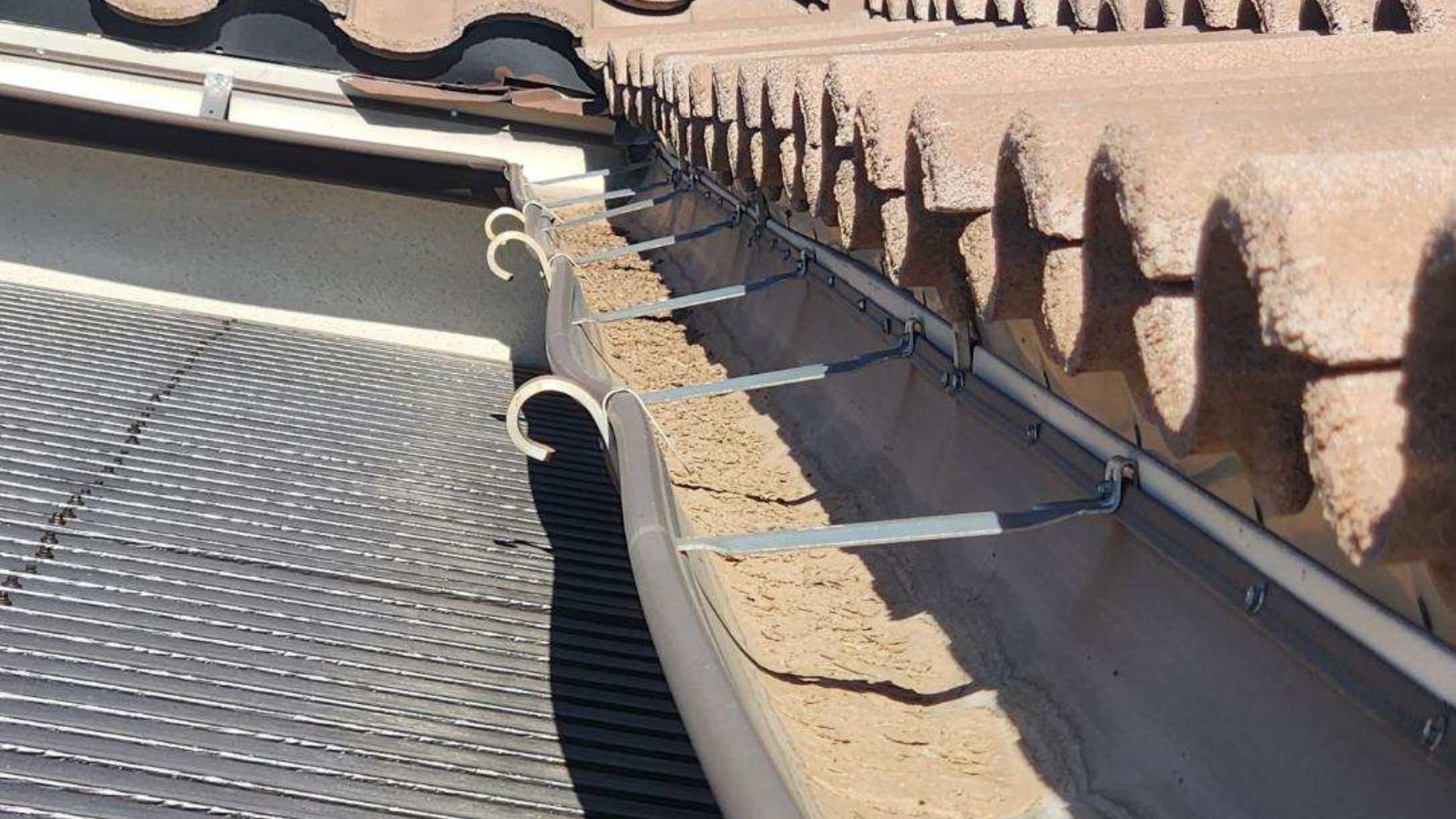
Unlike regions with heavy leaf fall, Arizona gutters collect a distinct blend of debris. Homeowners must recognize these materials to understand the cleaning urgency. The primary culprits include fine desert dust, which hardens into a concrete-like layer when wet, and seed pods from native trees like acacia and palo verde. Additionally, roof gravel from flat or low-slope roofs common in Southwestern architecture often washes into the gutters.
Another16 critical16 factor is the presence of wildlife. Gutters clogged with moist debris become ideal nesting sites for roof rats, pigeons, and scorpions. The Arizona Department of Health Services warns that stagnant water in clogged gutters also serves as a breeding ground for mosquitoes, which can carry West Nile virus. This transforms gutter maintenance from a structural concern into a public health priority.
 How Often Should You Clean Gutters in Arizona?
The standard recommendation for Arizona homeowners is a biannual cleaning schedule. The first cleaning should occur in late spring, typically May, to prepare for the monsoon season. The second cleaning is essential in early autumn, around October, to remove the accumulated debris from summer storms. However, properties with overhanging trees or those located near open desert areas prone to dust devils may require quarterly cleanings.
As Mark Stevens, a certified home inspector with Desert Shield Inspections, explains: “I’ve seen16 countless16 Arizona homes where16 gutters were ignored for just one monsoon season. The resulting water damage to stucco and foundations often costs homeowners between $3,000 and $8,000 to remediate. A $150 cleaning service is a16 smart investment.”
Professional vs. DIY Gutter Cleaning: A Cost-Benefit Analysis
Homeowners must weigh the upfront savings of DIY cleaning against the safety risks and16 thoroughness of professional services. Professional gutter cleaning in Arizona typically costs between $119 for a small single-story home and $325 for a large two-story residence with complex rooflines. This price usually includes downspout flushing and a basic inspection of the gutter system.
| Factor | DIY Gutter Cleaning | Professional Service |
|---|---|---|
| Average Cost | $30–$75 (equipment) | $119–$325 per visit |
| Time Investment | 3–5 hours | 1–2 hours |
| Safety Risk | High (ladder falls) | Low (insured professionals) |
| Inspection Quality | Basic visual check | Comprehensive system check |
| Debris Disposal | Homeowner responsibility | Included in service |
For DIY enthusiasts, the essential tools include a16 sturdy extension ladder with standoff stabilizers, a plastic scooping tool, a five-gallon bucket with a hook, and a garden hose with a high-pressure nozzle. Never use a metal trowel, as it can scratch and damage the gutter material, leading to premature rust in Arizona’s occasional humidity spikes.
16-Step DIY Gutter Cleaning Process for Arizona Homes
If you choose to clean your gutters yourself, following a systematic approach ensures safety and effectiveness. This16-step method accounts for Arizona’s specific debris16 types and roof styles.
- Assemble Safety Gear: Wear non-slip shoes, safety glasses, and heavy-duty gloves to protect against sharp metal edges and scorpion stings.
- Check Ladder Stability: Place the ladder on level, solid ground. Avoid placing it on decorative rock, which is common in Arizona landscaping and can shift.
- Remove Large Debris: Start near the downspout and use a plastic scoop to16 remove16 caked-on dust and seed pods. Deposit debris into the hanging bucket.
- Flush the Gutters: Use a garden hose with a pistol-grip nozzle to flush remaining silt toward the downspout.
- Clear Downspouts: If water backs up, the downspout is clogged. Use a plumber’s snake or a strong spray from the bottom up to dislodge the blockage.
- Inspect for Leaks: After flushing, check for dripping joints or holes. Apply silicone-based sealant to minor leaks.
- Check Slope and Alignment: Gutters should slope slightly toward the downspout. Adjust hangers if water pools in the middle.
- Trim Overhanging Branches: Cut back palo verde and mesquite branches that drop debris directly onto the roof.
- Test Downspout Drainage: Ensure water exits at least 5 feet away from the foundation. In Arizona, this often means extending downspouts beyond gravel beds.
- Secure Loose Fasteners: Tighten or replace gutter spikes and hangers that have loosened due to thermal expansion.
16 Common Mistakes Homeowners Make
Even well-intentioned homeowners can make errors that reduce the effectiveness of their gutter cleaning or create new problems. Avoiding these pitfalls is16 crucial for long-term home health.
- Cleaning at the Wrong Time of Day: In Arizona’s summer, roof temperatures can exceed 150°F by 10 a.m. Always clean at dawn to avoid heat exhaustion and burns.
- Ignoring the Roof: Debris on the roof itself will simply wash into clean gutters during the next rain. Sweep or blow off the roof first.
- Using a Pressure Washer Incorrectly: High pressure can dent aluminum gutters and force water behind fascia boards. Stick to a standard garden hose.
- Forgetting Underground Drains: Many Arizona homes have buried downspout extensions. These can clog with mud and roots, requiring a professional jetting service.
16 Gutter Guard Solutions for Desert Environments
Given the unique challenges of fine dust and intense sun, not all gutter guards perform equally in Arizona. The most effective options balance filtration with durability against UV radiation.
Micro-mesh guards, made from surgical-grade stainless steel, are the top recommendation from local installers. They filter out fine desert sand while allowing water to pass through. Foam inserts, while cheap, degrade rapidly under the Arizona sun and can trap16 dust, creating a dam. Brush guards are16 moderately effective but require frequent removal and cleaning themselves.
According to a 2026 market analysis by Home Innovation Research Labs, homes with professionally installed micro-mesh guards reduce gutter cleaning frequency by 75% to 80%. “The initial investment of $1,500 to $2,500 for a typical Arizona home pays for itself within three years through reduced maintenance costs and prevented water damage,” notes Sarah Jenkins, a senior analyst at the firm.
awn16 Health andawn16 Safety: Scorpions, Mosquitoes, and Mold
The health implications of neglected gutters extend beyond structural damage. Stagnant water and organic debris create a micro-ecosystem that attracts pests. The Arizona bark scorpion, the most venomous scorpion in North America, seeks moisture and shelter in clogged gutters and downspouts. A single gutter system can harbor dozens of scorpions, which then gain access to the attic and living spaces.
Furthermore, the Centers for Disease Control and Prevention highlights that clogged gutters are a primary breeding site for Aedes aegypti mosquitoes, vectors for Zika, dengue, and West Nile virus. In 2026, Maricopa County reported a 15% increase in mosquito-borne disease vectors linked to residential water sources. Mold growth from persistent dampness also releases spores that exacerbate allergies and asthma, a significant concern in a region where dust-related respiratory issues are already prevalent.
16 Water Conservation Through Gutter Maintenance
In a state perpetually conscious of water usage, functional gutters play a surprising role in conservation. By channeling rainwater effectively, homeowners can harvest this resource for landscaping. A 1,500-square-foot roof can collect approximately 900 gallons of water from just 1 inch of rainfall.16 Redirecting clean downspout water into rain barrels or cisterns reduces reliance on municipal water supplies for irrigation.
The Arizona Department of Water Resources encourages rainwater harvesting as a best practice. However, this system only works if the gutters are free of debris that would contaminate the collected water.16 Clean gutters ensure that the harvested water is suitable for drip irrigation systems, supporting the state’s sustainability goals.
16 Local Regulations and HOA Requirements
Many Arizona communities, particularly master-planned developments in Scottsdale, Gilbert, and Chandler, have strict Homeowners Association (HOA) guidelines regarding exterior maintenance. Visible gutter overflow, sagging sections, or plant growth in gutters can result in violation notices and fines. Regular cleaning is often a mandated part of the Covenants, Conditions, and Restrictions (CC&Rs).
Before starting any16 major gutter replacement or guard installation, homeowners should verify local building codes. Some municipalities require permits for significant alterations to drainage systems to ensure they do not negatively impact neighboring properties or public right-of-ways.16 Checking with the local planning department prevents costly retrofits.
16 Hiring a Qualified Gutter Cleaning Service in Arizona
Selecting a reputable contractor is paramount. Homeowners should always verify that the company holds a valid license through the Arizona Registrar of Contractors. A landscaping license (Category C-21) or a general contracting license typically covers gutter cleaning. Additionally, confirm that the company carries general liability insurance and workers’ compensation. Without it, the homeowner could be liable for injuries sustained on their property.
As David Chen, owner of Valley Wide Gutter Pros, advises: “Always get a written estimate that specifies the scope of work. A16 quality service includes hand-cleaning debris, flushing downspouts, and a visual inspection of the entire system. Beware of companies that only offer ‘blowing out’ the gutters with a leaf blower—this leaves the hardened silt layer intact.”
16 Seasonal Gutter Maintenance Calendar for 2026
To simplify16 planning, here is a month-by-month breakdown of gutter-related tasks tailored to Arizona’s climate in 2026.
- January–March: Inspect for winter storm damage. Check for loose fasteners caused by temperature fluctuations.
- April–May: Schedule primary pre-monsoon cleaning. Install or repair gutter guards. Trim trees.
- June–September: Perform visual checks after major monsoon storms. Ensure downspouts are directing water away from the foundation.
- October–November: Schedule post-monsoon cleaning to remove16 accumulated silt and seed pods.
- December: Inspect for ice dams? Unlikely in the valley, but homes in higher elevation areas like Flagstaff require checks for snow and ice buildup.
Frequently Asked Questions
What is the average cost of gutter cleaning in Arizona in 2026?
The average cost ranges from $119 to $325, depending on the home’s size, number of stories, and linear footage of gutters.16 Additional services like downspout flushing or minor repairs may incur extra charges.
Can I clean my gutters without a ladder?
Yes, specialized tools like gutter cleaning wands that attach to a garden hose or leaf blower attachments can allow for ground-level cleaning. However, these methods are less effective at removing the hardened silt common in Arizona and do not permit a close inspection of the gutter’s condition.
How do I know if my downspout is clogged underground?
Signs of an underground clog include water bubbling up from the ground near the downspout exit, a persistent wet spot in the yard, or water backing up and overflowing from the gutter at the downspout connection during rain. A professional plumber or gutter service can use a camera scope to diagnose the issue.
Are seamless gutters better for Arizona homes?
Seamless gutters are generally superior because they have fewer joints where leaks can develop. They are custom-fabricated on-site to fit the home’s dimensions, reducing the risk of16 debris catching on seams and16 improving16 overall durability against thermal expansion.
Do gutter guards work with pine needles in Arizona’s high country?
In mountainous areas like Payson or Prescott, pine needles are a major challenge. Many standard guards struggle with needles that can pierce screens or wedge into holes. A micro-mesh guard with a fine weave is the most effective16 solution for pine needles, though no guard is completely maintenance-free.
What are the signs I need new gutters instead of just cleaning?
Indicators include large cracks or splits in the gutters, peeling paint or rust, water marks or mold beneath the gutters on the fascia, and gutters that have pulled away from the roofline. If repairs exceed the cost of replacement, new gutters are the more economical long-term choice.
Is gutter cleaning covered by homeowners insurance?
Typically, standard homeowners insurance policies do not cover gutter cleaning, as it is considered routine maintenance. However, if clogged gutters cause sudden and accidental water damage to the interior of the home, the resulting damage might be covered, though the insurer may dispute the claim if negligence is proven.
Conclusion
In Arizona, proactive gutter cleaning is a fundamental aspect of responsible homeownership. It safeguards your property against the destructive forces of monsoon rains, prevents pest infestations, and contributes to16 broader water conservation efforts. Whether you choose to tackle this task yourself with a16 meticulous 16-step16 process or hire a licensed professional, the key is consistency. Do not wait for water stains on your ceiling or cracks in your foundation to take action.16 Prioritize your gutter maintenance schedule today to protect your home’s value and your family’s health. For expert assistance or to schedule a16 comprehensive inspection, contact our team of Arizona gutter specialists today.
References
- National Weather Service – Monsoon rainfall data and safety information.
- Insurance Institute for Business & Home Safety – Research on water damage claims and prevention.
- Centers for Disease Control and Prevention – Mosquito-borne disease data and prevention guidelines.
- Arizona Registrar of Contractors – Contractor licensing and verification resource.
- Arizona Department of Water Resources – Rainwater harvesting and water conservation guidelines.
- Home Innovation Research Labs – Market analysis on gutter guard effectiveness.